
1. Risk Score in Cryptocurrency: What is it and how does it work?
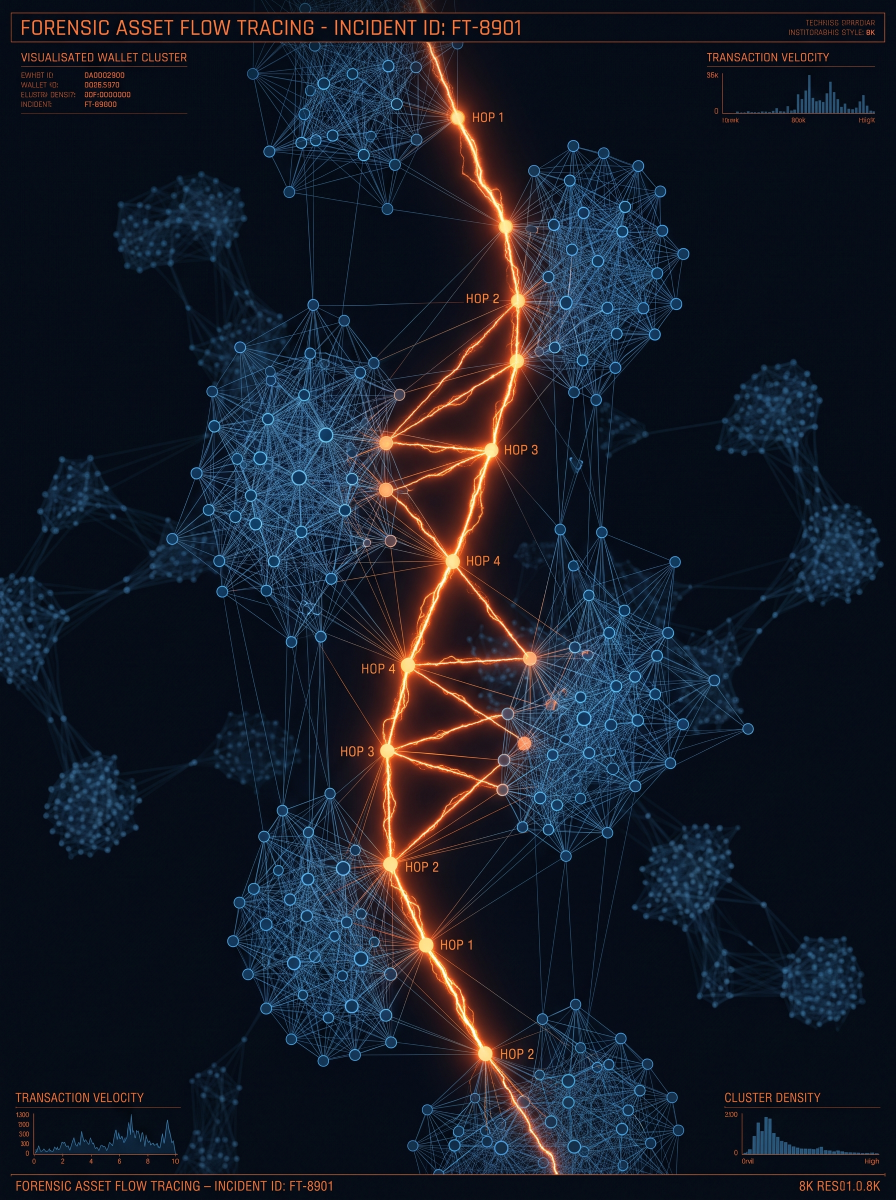
Your Risk Score in cryptocurrency (Risk Level) is a percentage metric from 0% to 100% reflecting the probability that funds in a wallet are linked to illicit activity. The blockchain is absolutely transparent: it is impossible to hide where the coins came from. Analytical platforms trace transaction histories dozens of "hops" back.
2. Trigger Categories: Red Flags and Yellow Flags
Not all transactions are equally dangerous. Any AML compliance department divides sources into categories, with reactions ranging from a request for explanation to immediate termination of the client agreement.
| Trigger Type | Sources (Examples) | Algorithm Reaction (Compliance) |
|---|---|---|
| Red Flags | Mixers (Tornado Cash), Darknet Marketplaces, sanctioned platforms. | 100% Risk Score in cryptocurrency. Instant hardware freeze (Auto-freeze) with no withdrawal rights. |
| Yellow Flags | High-Risk CIS exchangers, Gambling (casinos), opaque P2P transfers. | Temporary freeze. Manual review by an AML officer requesting Source of Funds documents. |
3. The Infection Effect and Address Poisoning Attacks
Imagine your wallet is crystal clear. You decide to sell some of your stablecoins via a P2P platform. The counterparty sends you USDT. And then the irreparable happens: algorithms see that 5 transactions ago these coins passed through a mixer or were stolen.
In the AML world, there is a "Tainted Funds" rule. Clean money mixes with dirty money, and your Risk Score in cryptocurrency instantly skyrockets to a critical level.
Case Study (August 2026): Address Poisoning and Tether Blacklist
A clear example of algorithm strictness is a recent incident involving an HNW client of Reclaim Capital from Colombia. His non-custodial wallet (0x21FA...0eD8) received two micro-transactions (0.0007 and 0.00015 USDT) from a malicious address 0x6469...CA88.

The client ignored these pennies, but it was a targeted attack. The sender was listed in public scammer databases. Result: Tether Limited directly added the client's wallet to its official Tether Blacklist at the smart contract level.
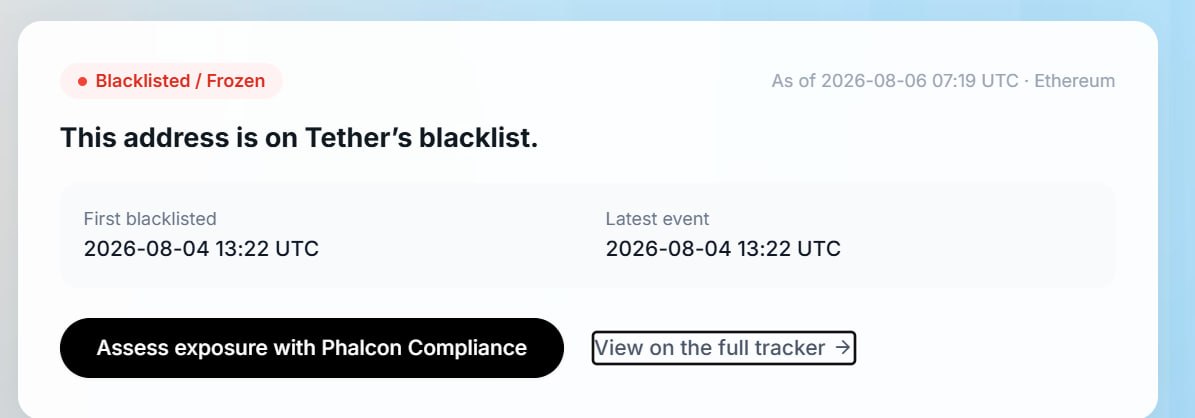
All assets on the address were blocked instantly. Any such Blocked USDT wallet scenario or falling under the issuer's sanctions stops transit operations just as strictly as the internal AML compliance of centralized platforms. If the problem is caused not by a hard smart contract ban, but by a hidden high Risk Score in cryptocurrency due to indirect transit links to toxic clusters, a standard superficial check is powerless. In such crisis situations, to unfreeze the capital, a deep institutional KYT verification and a flawlessly formed package of documents according to the Source of Funds (SoF) standard, proving your good faith, are critically necessary.
4. Non-Custodial Wallets and the FATF Travel Rule
Many investors believe that keeping funds in hardware wallets (Ledger, Trezor) or Metamask protects them from compliance checks. This is a misconception. The moment you decide to transfer funds from a cold wallet to a regulated exchange, the FATF Travel Rule comes into play.
Exchanges are required to know who owns the non-custodial wallet sending the money. If you transfer a large sum and cannot prove the address is yours, the algorithm treats it as an attempted money laundering, and your Risk Score in cryptocurrency shoots to a critical mark.
5. The Illusion of Splitting, Tracking Depth, and "Statute of Limitations"
The main metric in blockchain analytics is tracking depth (Hops). It shows how far back in time the system can trace a coin's origin.
Is there a "statute of limitations" for dirty crypto?
Frequent question: «If a suspicious transaction happened 3 years ago, is my Risk Score in cryptocurrency still in danger?» Answer: The blockchain forgets nothing. Clustering algorithms consider "distance", but for funds tied to OFAC lists, there is no statute of limitations.
Many investors think that if you mix $10,000 of dirty USDT with $90,000 of clean ones, the problem gets diluted. In reality, advanced analytical systems use clustering algorithms. They will infect your entire $100,000 balance, and the exchange will freeze the whole amount until a full investigation is conducted.
6. Institutional Software: An Inside Look
One of the paradoxes of the crypto market is that different exchanges can evaluate the same transaction differently. This happens because AML compliance departments use different on-chain analytics software.
- Chainalysis: Gold standard in the US. Heavily used by Binance, Kraken, and government agencies. Has the strictest policy regarding mixers and OFAC sanctions.
- Crystal Intelligence: Frequently used by European banks and financial institutions. Places a huge emphasis on ties with shadow OTC markets.
7. Response Mechanism: How to Cleanse an Asset
If your funds are frozen because your Risk Score in cryptocurrency exceeded the allowable limit, panicked emails to support won't help. First-line tech support works off scripts and is not authorized to lift blocks.
The only legitimate path is a professional KYT verification of your address and the formation of a flawless Source of Funds document package, together with a Legal Opinion that proves the legality of your capital.
- Separating legally acquired coins from the transactions that brought "dirt" to the wallet.
- Proving the client was unaware of the toxic source during an OTC or P2P deal.
- Drafting a detailed Source of Funds report for the compliance department.
- Preparing a Legal Opinion memorandum proving the compliance trigger was a false positive and establishing the status of a bona fide purchaser.
Got a Blocked USDT wallet?
The longer you try to solve the problem using standard methods, the higher the chance of irreversible capital loss. Select your asset below to check the smart contract for free and request a KYT verification audit.
Frequently Asked Questions (FAQ)
Can I lower my Risk Score in cryptocurrency myself?
Do free Telegram bots help protect against blocks?
This material was prepared by the Reclaim Capital analytics department. We specialize in managing "special situations" in complex jurisdictions. Our profile includes institutional compliance audits, digital forensics, and asset protection.
Important note: our firm does not provide public services for mass account unblocking. However, leveraging our deep expertise in blockchain investigations, the Reclaim Capital team takes on complex "crisis" cases regarding the recovery of large capital — both from centralized exchanges and non-custodial wallets (including Tether Blacklist issues). Such matters are handled strictly through personalized, individual engagement for institutional and HNW clients.
This material is for informational purposes only and does not constitute legal or financial advice. Your individual Risk Score in cryptocurrency may depend on dozens of variable factors.
To evaluate your case, contact an expert: @ReclaimCapital

