

1. Careless P2P Transactions: The Main Trap for Users
The most common cause of blacklisting among retail users and OTC traders is receiving "tainted" cryptocurrency through P2P platforms. You might sell a perfectly legal asset, but receive USDT in return that was previously involved in a hack or scam.
The analytics system detects a link between your wallet and illicit capital. In such cases, legal USDT wallet unblocking and the recovery of frozen Tether are only possible upon fully proving your status as a good-faith purchaser.
Those in the highest risk zone include: OTC desks, arbitrage traders, merchants, and active users. It is for these specific cases that we provide turnkey KYT (Know Your Transaction) auditing services.
2. OFAC Sanctions and Mixers: The Zero Tolerance Zone
Interacting with cryptocurrency mixers (e.g., Tornado Cash) is treated by regulators as money laundering. Even if you transferred funds merely for privacy reasons, Tether Limited will freeze associated addresses.
Direct interaction with addresses listed in the OFAC sanctions lists (U.S. Department of the Treasury) is a critical violation. If a freeze occurred for this reason, unblocking your USDT wallet will require obtaining a specific license, a process that a specialized crypto compliance attorney must handle.
The Law Enforcement Agency (LEA) Trap
The illusion of a quick fix shatters when it turns out the freeze was initiated by the police. In this scenario, the issuer has no legal right to lift the restrictions independently. Direct legal engagement with the initiating law enforcement agency is strictly required.
Practical Case: The On-Chain Mechanics of a Freeze
To understand the gravity of the situation, one must look at how the freezing protocol operates in practice. Below are objective records from the Tronscan block explorer, documenting the freezing of over 131 million USDT.
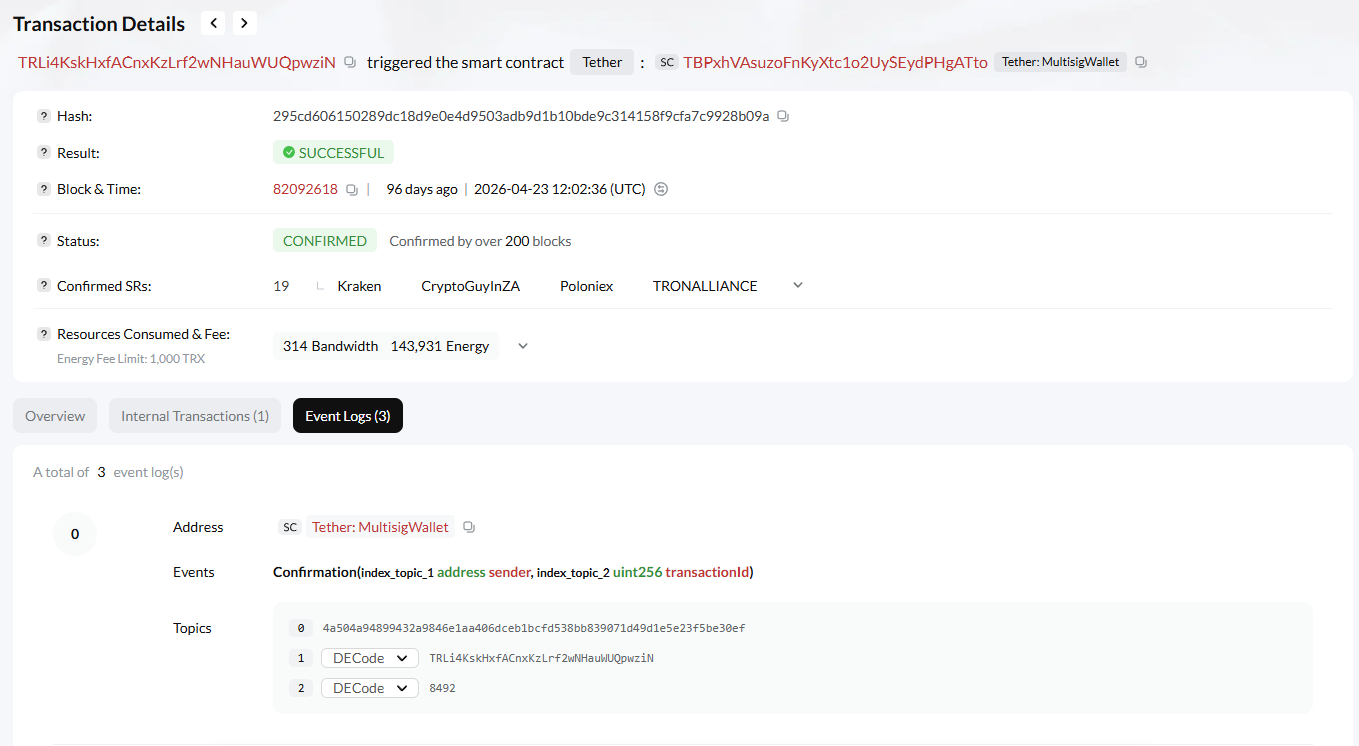
Fig 1. Initiation: Calling the Tether: MultisigWallet smart contract. The use of Multi-Signature guarantees that the decision to apply sanctions is made by decentralized authorized parties, eliminating the risk of a single point of failure.
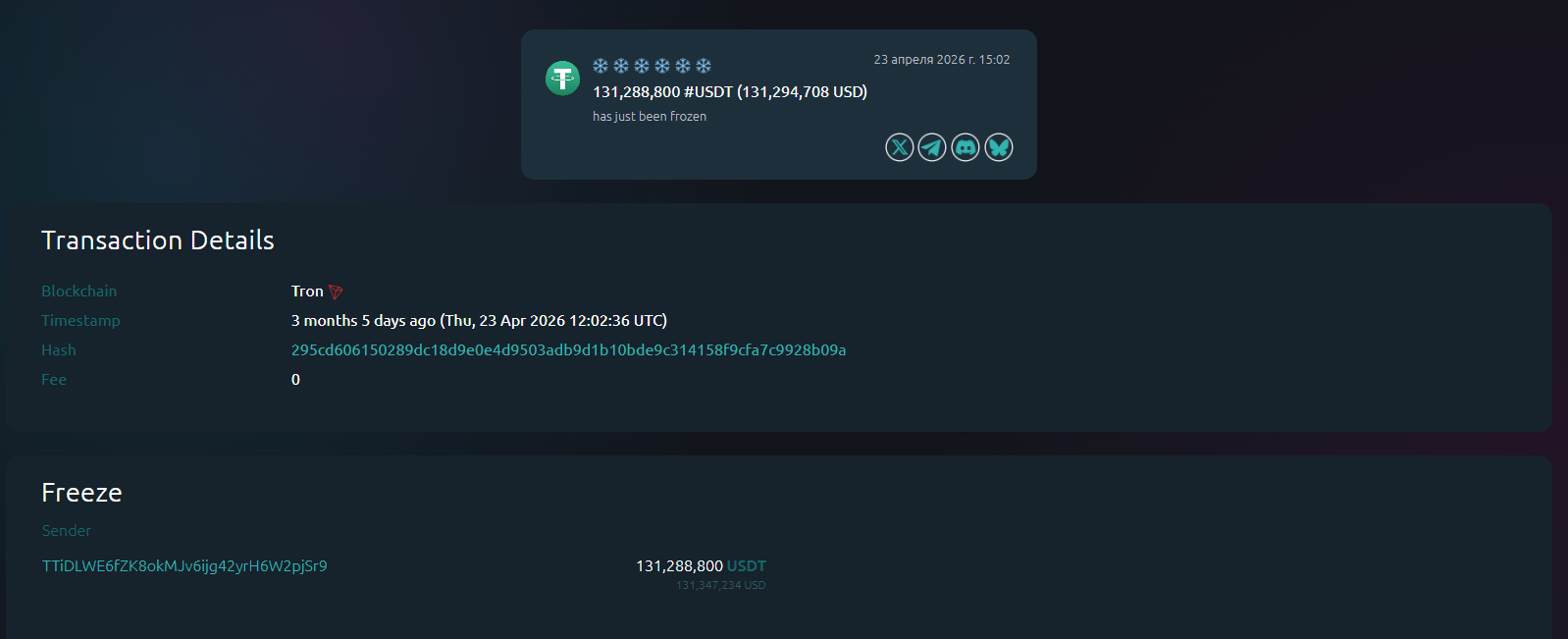
Fig 2. Execution: The actual freezing of 131,288,800 USDT on the target address. The transaction is permanently recorded on the blockchain (Hash: 295cd...b09a), structurally depriving the owner of the ability to move the asset.
3. The Hidden Cost of Waiting: Why Inaction is Dangerous
Leaving frozen funds on your balance, hoping the situation will resolve itself, is a direct path to total asset loss.
Civil Asset Forfeiture
If the owner fails to take steps to prove the legality of the funds over an extended period, law enforcement agencies may initiate Civil Asset Forfeiture proceedings.
The Legal Dead End Without a Legal Opinion
- Tether's technical support does not process requests from private individuals without a formal Legal Opinion.
- For USDT wallet unblocking to be successful, a formal Tether blacklist removal petition backed by a KYT audit is mandatory.
- Time is against you: the longer the funds sit, the harder it becomes to gather necessary banking and trading evidence.
| Reason for Freeze | Technical Status | Probability of Lifting Restrictions |
|---|---|---|
| "Dirty" P2P Transfers | Tether Blacklist Smart Contract | High (with SoF evidence) |
| Police Request (LEA) | Frozen pending investigation | Medium (requires LEA interaction) |
| False Chainalysis Flag | High Risk Score | Very High (after KYT audit) |
| Direct OFAC Sanctions (SDN) | Blocked by US Treasury | Low (requires OFAC license) |
4. Professional Audit: The Only Way Out
While most users waste time corresponding with tier-1 support bots, a concrete legal mechanism exists. Only a professional approach guarantees that the unblocking of your USDT wallet and the recovery of frozen Tether will proceed within the bounds of the law.
We handle the entire process: from blockchain chain-of-custody investigations to official representation before the issuer.
- Funds remain frozen with no prospects.
- Risk of full confiscation by authorities.
- Loss of evidentiary base over time.
- Cascading blocks on associated addresses.
- Immediate Transaction Analysis (KYT).
- Official drafting of a Legal Opinion.
- Direct communication with Tether Ltd.
- Address removal from the Blacklist smart contract.
The Legal Unblocking Protocol
Notice: Case Acceptance Criteria (Requirements)
We accept applications for Tether (USDT) unblocking services exclusively for frozen amounts of $100,000 and above. To initiate a case, you must be prepared to provide our team with comprehensive evidence regarding the legal origin of the capital (Source of Funds).
Ready to Unfreeze Your Assets?
For wallet owners blocked as a result of P2P transactions, compliance checks, or law enforcement requests, official legal representation is the only reliable path forward. Contact us for a confidential assessment of your case.
Frequently Asked Questions (FAQ)
How long does the unblocking process take?
Can funds be extracted technically (via hacking)?
What does "Bona Fide Purchaser" status mean?
This material was prepared by the analytical department of Reclaim Capital. We specialize in managing special situations in complex jurisdictions. Our core focus is compliance auditing, official representation, and the protection of digital assets.
Please note: this publication is for informational and analytical purposes. We are ready to conduct a detailed evaluation of your case and provide professional legal defense.
Contact us: @ReclaimCapital

