
1. The Illusion of the "Fast Track" and Jurisdictional Warfare
During the early stages of the bankruptcy, thousands of creditors were encouraged to transfer their claims to the jurisdiction of the Supreme Court of the Bahamas (the Bahamas Election). This route was marketed as a less bureaucratic alternative to the US Chapter 11 process, promising faster distributions.
In reality, investors found themselves in the crossfire of a corporate war. Before signing the Global Settlement Agreement, the US debtors (via Kroll) and the Bahamian liquidators spent tens of millions of dollars in legal battles over asset control. By opting for the Bahamas, creditors voluntarily waived the protection of US courts and entered a jurisdiction where the liquidators' decisions are practically unappealable by private individuals.
2. The FATF Factor: Why FTX PwC Bahamas Liquidators Cannot Release Funds
It is crucial to understand that the rigorous audits by PwC are not arbitrary; they are a direct consequence of local laws. The Bahamas has long been under the threat of inclusion in the "grey lists" of the FATF (Financial Action Task Force). To avoid global financial sanctions, local regulators have implemented paranoid-level AML standards.
The auditors are constrained by local legislation—primarily, The Proceeds of Crime Act, 2018 (POCA). The liquidators simply do not have the legal right to approve the withdrawal of substantial funds to high-risk jurisdictions without absolute documentary proof of the legitimacy of every cent. Any deviation from these rules threatens the liquidators themselves with license revocation and criminal prosecution.
3. EDD Protocols and SOW/SOF: The Anatomy of an Impossible Audit
Under regulatory pressure, the official portal for FTX PwC Bahamas creditors has ceased to be a place for swift verification. Liquidators are deploying mass Enhanced Due Diligence (EDD) protocols. Unlike basic KYC (passport and selfie), EDD is a deep financial screening of the investor:
- Source of Wealth (SOW): Documentary proof of the legality of overall wealth. You may be asked for official tax returns, audit reports, or property/business sale agreements spanning the last 10 years.
- Source of Funds (SOF): A detailed transaction chain proving exactly how fiat money converted into crypto assets deposited into FTX. This often requires historical bank statements and log files from other exchanges covering 2018–2021.
- On-chain Tracing: Systems like Chainalysis or Elliptic analyze your transaction history. If you bought USDT via P2P three years ago, or if coins passed through sanctioned entities, algorithms automatically flag the account as High Risk.
- Adverse Media & Sanctions: Automated screening against databases for sanctions lists, PEP (Politically Exposed Persons) status, and negative media mentions.
For the average investor, gathering, translating, and notarizing such a massive array of historical documents is technically impossible.
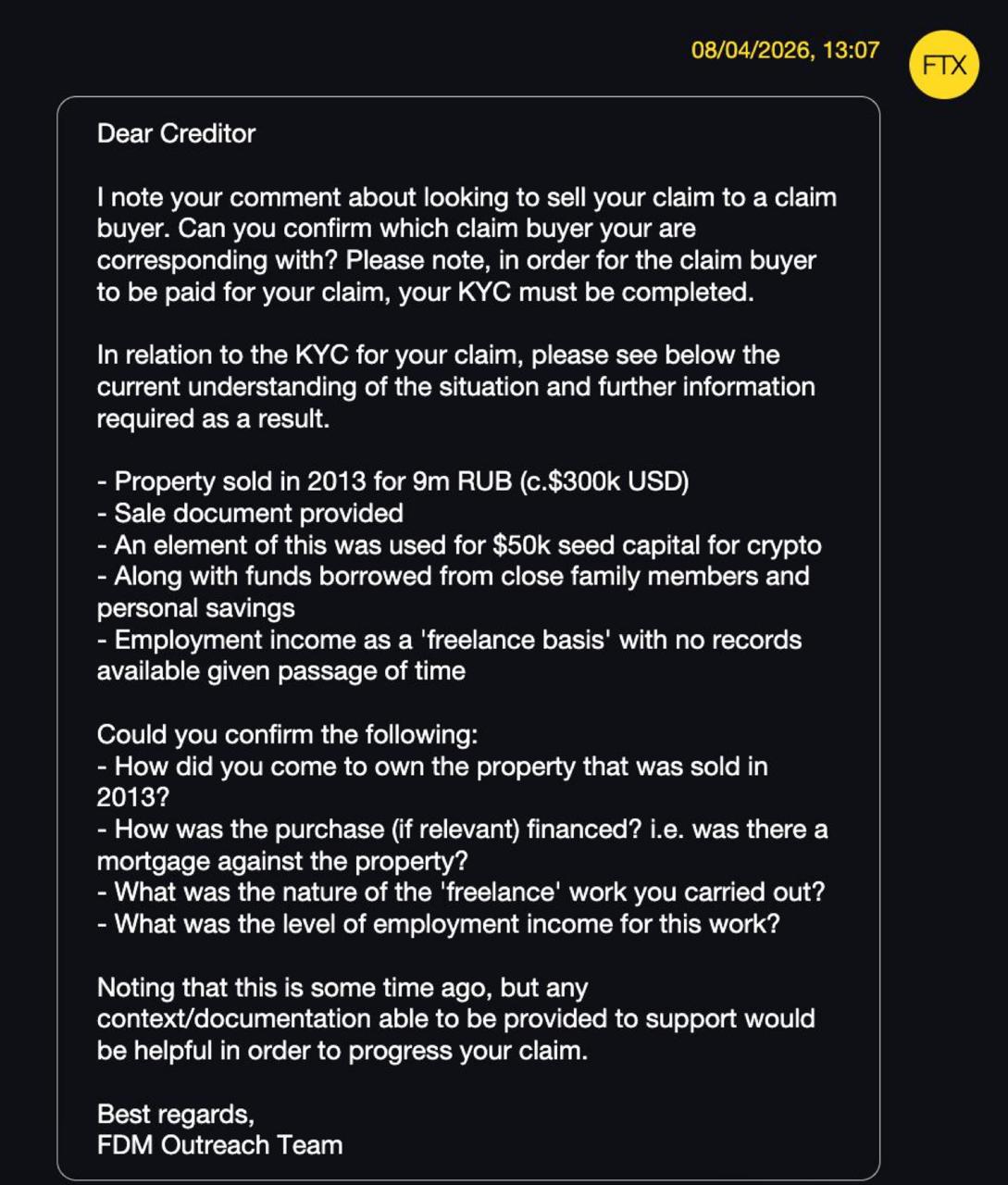
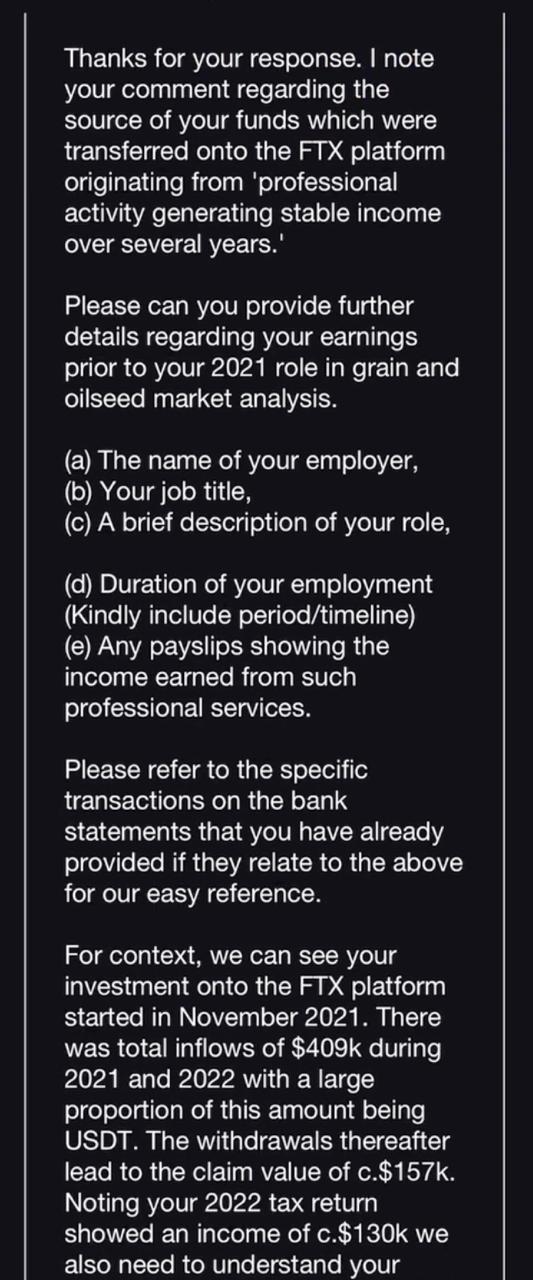
Such an "audit" allows the liquidators of FTX PwC Bahamas to legally retain your assets in the bankruptcy estate under the guise of compliance requirements. Any attempt to argue results in retaliatory measures—the account is placed in quarantine.
4. Support Blackout and the Portal Dead End
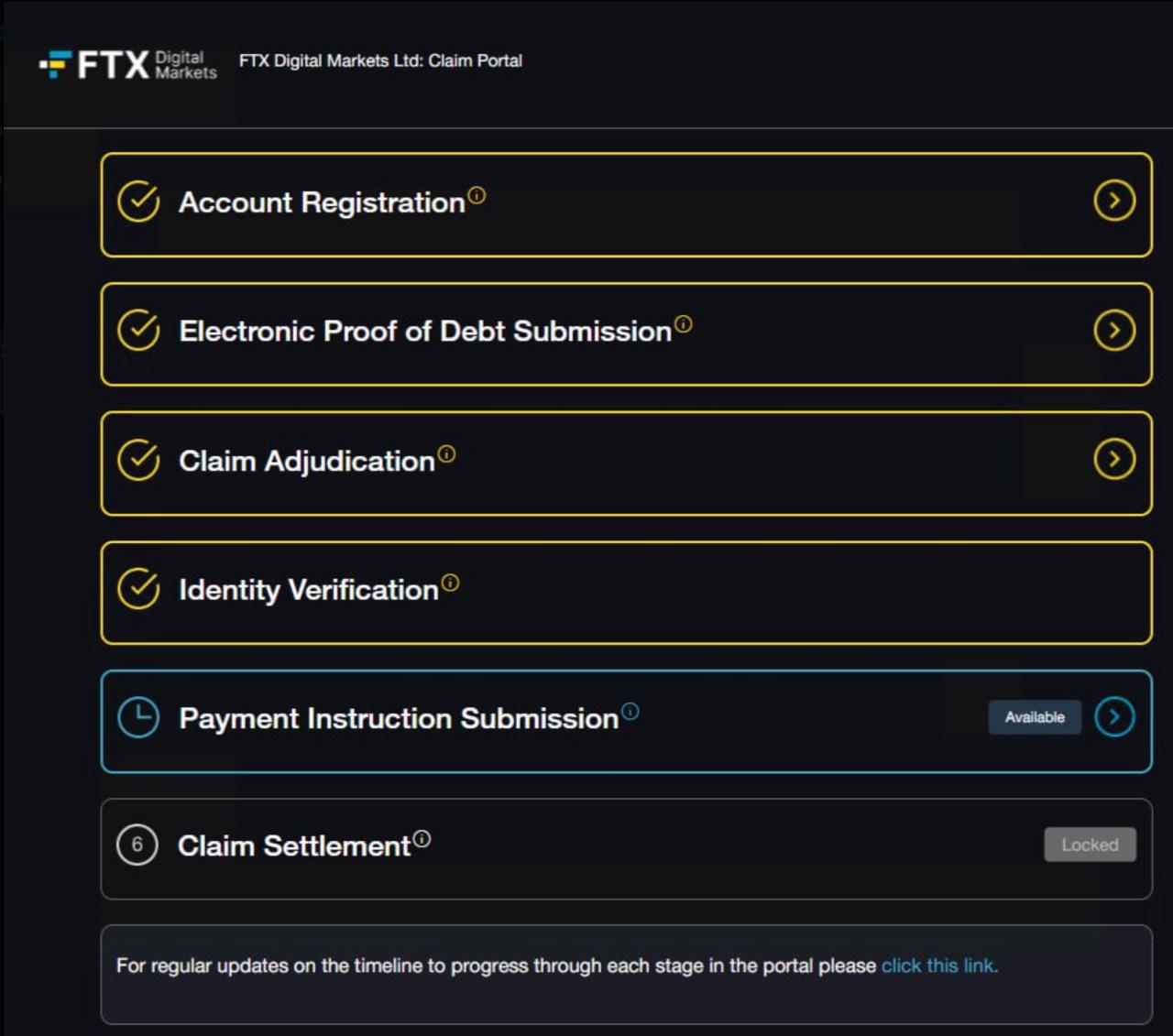
The only way to interact with the liquidators is through the Official FTX Digital Markets Portal. However, amidst prolonged audits, support has shifted to a tactic of total silence.
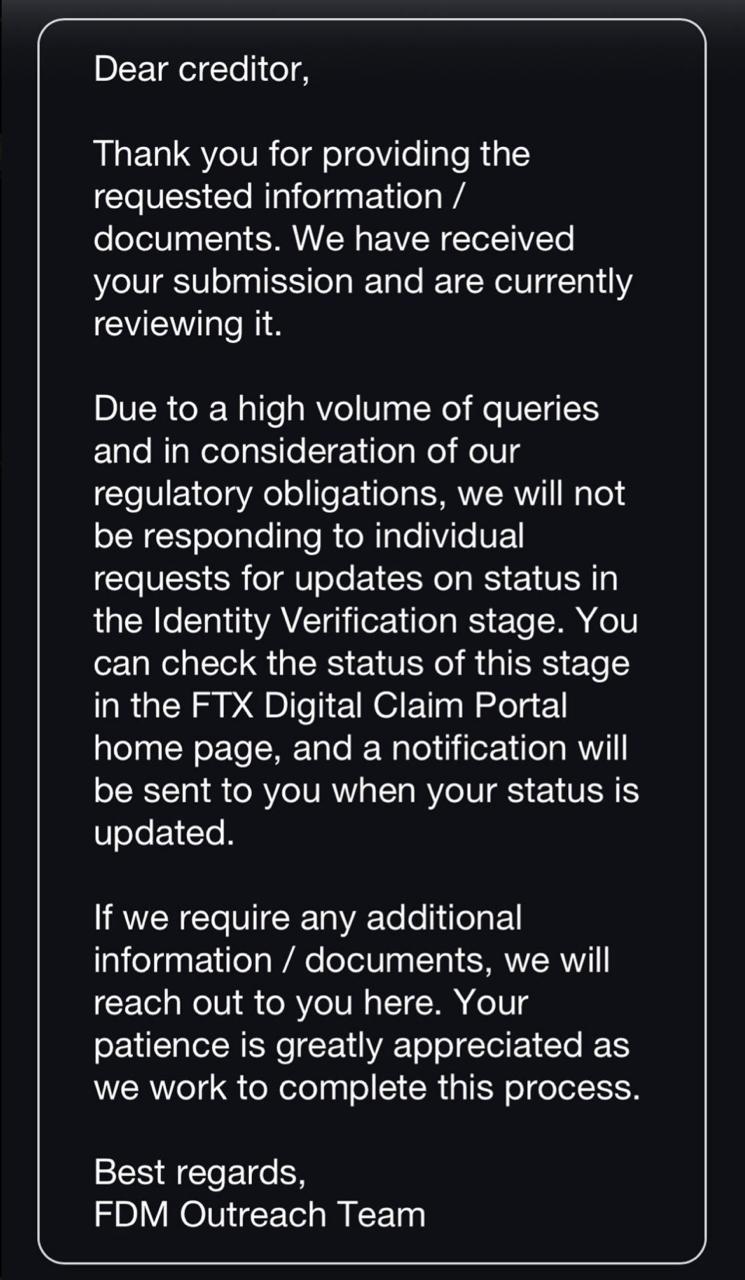
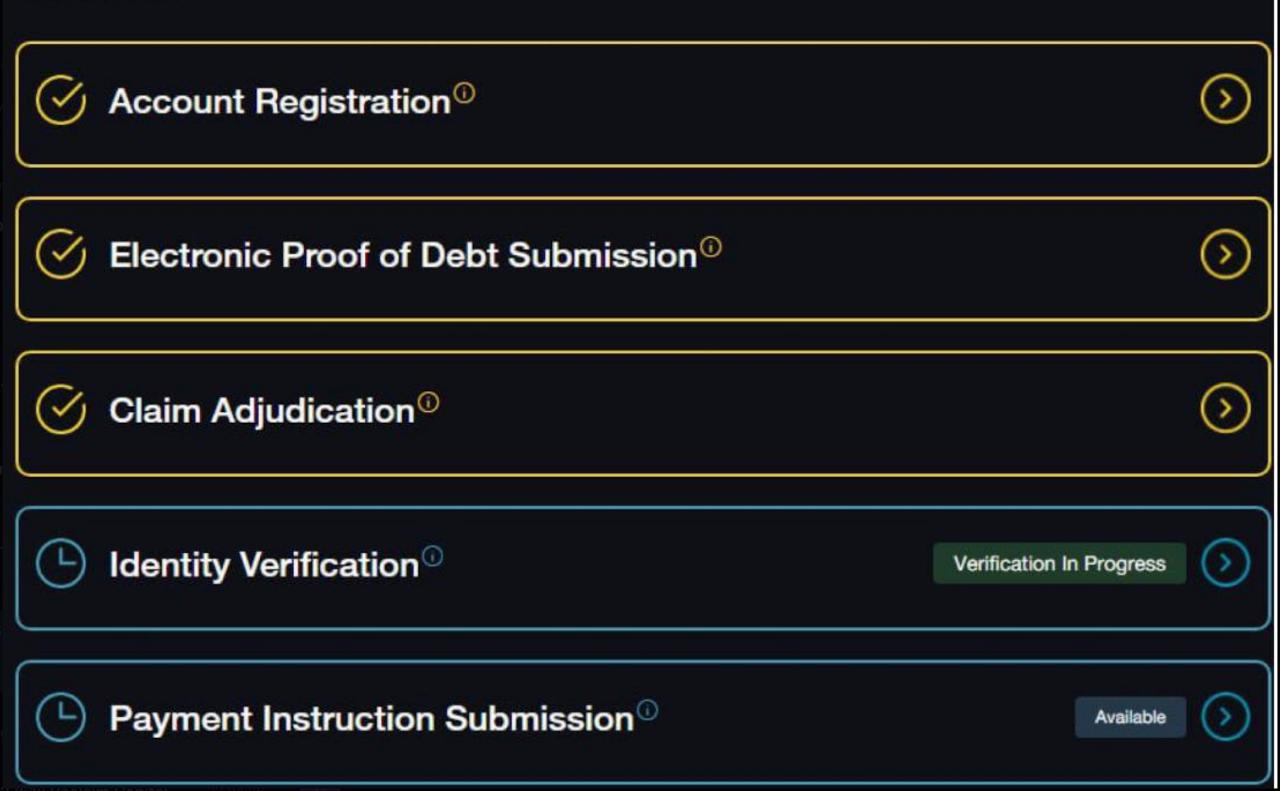
As a result, the vast majority of international users see the exact same stagnant picture in their personal dashboards.
5. Omnibus Objections: The Threat of Claim Expungement
If you believe you can simply leave your application pending, recent debtor filings suggest otherwise. Liquidators have begun issuing strict demands via mass legal filings known as Omnibus Objections.
This is a classic corporate trap within the FTX PwC Bahamas liquidation: liquidators file a single document in court against thousands of creditors simultaneously. You are given a deadline to provide the entire requested document package. If you fail to comply or do not hire a Bahamian attorney (billing at $800/hour) to file a counter-objection, your claim is legally expunged, and your funds permanently remain with the debtor.
6. The Secondary Market Economy: Why Funds Demand a Discount
Leading institutional buyers of distressed debt in the US strictly avoid purchasing claims associated with FTX PwC Bahamas due to the jurisdiction's toxicity. But why do the funds that do buy these debts demand a discount from the market value?
The answer lies in the Cost of Capital. Professional funds understand that money in the Bahamas will be locked in audits for another 1 to 3 years. By purchasing your debt, the fund is not just giving you rapid liquidity; it is freezing its own capital for years to come. Furthermore, the fund absorbs all costs for Bahamian lawyers and the execution of the complex SOF audit. It is this complete transfer of temporal, financial, and legal risks from the investor to the fund that establishes a fair market discount.
Breaking the Deadlock: Assignment of Rights Without Bahamian EDD
For creditors whose accounts are stuck at "Verification In Progress" or caught in a prolonged SOF audit by FTX PwC Bahamas, passive waiting risks multi-year asset freezing or total expungement.
Reclaim Capital possesses the infrastructure to acquire assets with complex compliance profiles. The Assignment of Claim procedure legally detaches the asset from your identity. You receive liquidity to your wallet within 24-72 hours, and we assume all obligations for the multi-year battle with the liquidators.
| Risk Factor | Via PwC Bahamas | Exit via Reclaim Capital |
|---|---|---|
| Jurisdictional Risk (SOF) | Critical. Inability to source 2013-2021 bank statements leads to rejection. | Eliminated. We close the deal without demanding historical bank statements. |
| Expungement Risk | Threat of total claim cancellation (Expunged) if court deadlines are missed. | Absent. You secure your funds and permanently exit the toxic legal process. |
| Liquidity Timeline | Years of waiting for responses from the FDM Outreach Team. | 24 – 72 hours following basic legal verification. |
Discover Your Claim's Value Today
Undergo a preliminary assessment of your FTX claim. Reclaim Capital evaluates claims starting from $10,000, offering a legal mechanism to secure asset value for investors trapped by FTX PwC Bahamas audits.
FAQ: FTX Digital Markets Compliance Barriers
Why are auditors requesting 10-year-old documents?
Can my payout be blocked if I already passed basic KYC?
Is it legal to sell a claim stuck "In Progress"?
This material was prepared by the experts at Reclaim Capital. We specialize in Distressed Asset management in Chapter 11 procedures and cross-border liquidations.
Please note: This publication is purely informational and analytical, based on market trend monitoring and analysis of public debtor claims. Potential audit delays are driven by the national legislation of the Bahamas. We are not affiliated with PwC Bahamas or FTX liquidators.
To request a preliminary valuation, contact us: @ReclaimCapital

