

1. Sanctions Mechanics: How the Circle Smart Contract Works
Simply put, the USDC stablecoin operates on top of the Ethereum network not as a regular coin, but as a manageable program. The core of this program resides in the official smart contract named FiatTokenProxy.
When analytical systems like Chainalysis detect a threat, law enforcement agencies forward a mandate to Circle. The contract administrator invokes a special function blacklist(address _account). Your wallet's status in the registry changes instantly. From that second on, the Ethereum network will reject any attempts to transfer or swap assets from your address.
Rejection of the TRON Network
Due to a critical volume of illicit operations, Circle has officially ceased minting and supporting USDC on the TRON (TRC-20) network. The entire array of compliance checks is now focused on the Ethereum, Polygon, and Solana networks, where the most advanced AML tracking modules operate.
2. Practical Case: Circle's Surgical Scalpel vs. Tether's Purges
On-chain monitoring statistics record an obvious fact: the USDC smart contract blocks addresses significantly less often than Tether. However, the cost of falling under Circle's sanctions is incomparably higher.
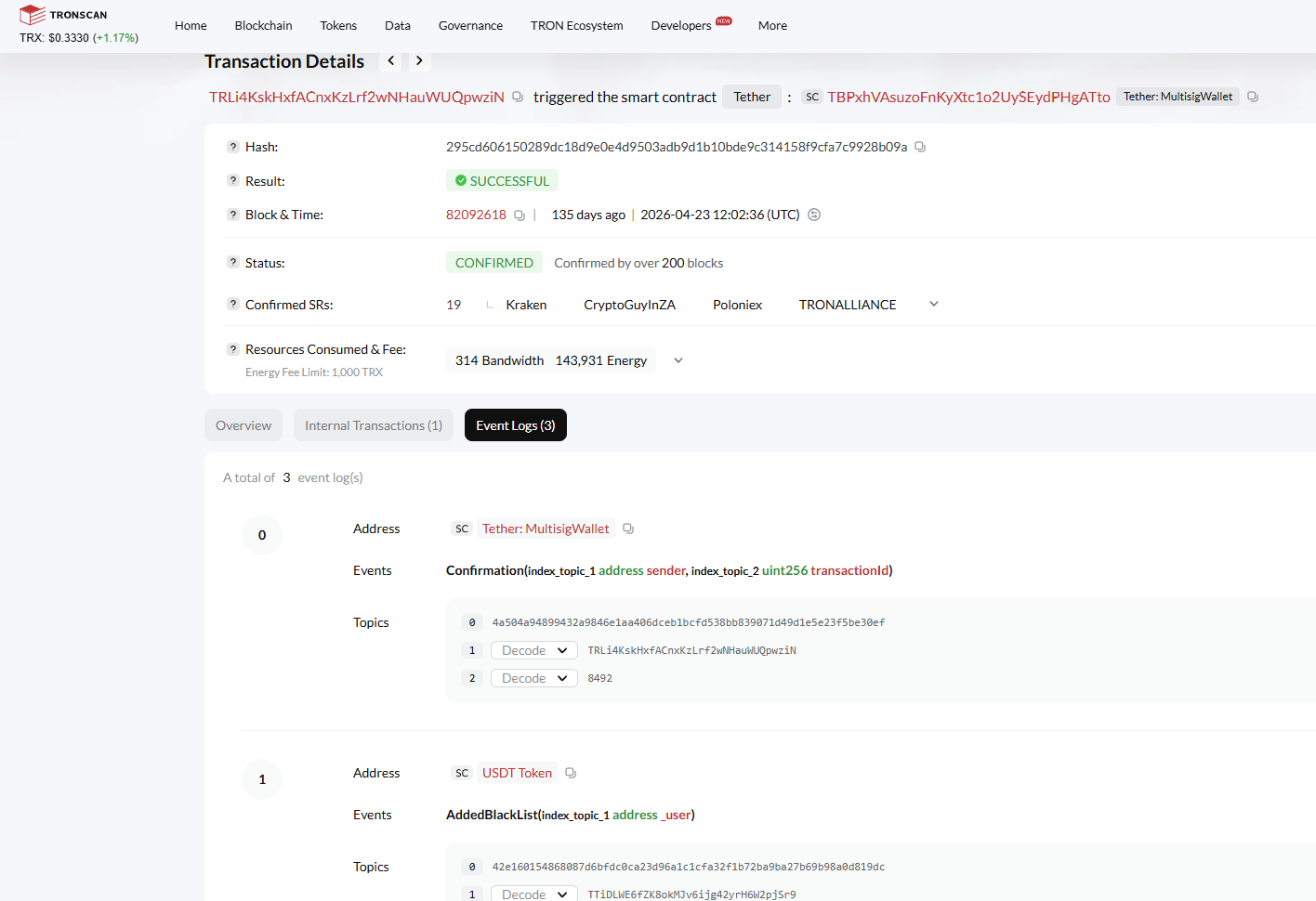
While Tether regularly conducts mass purges of secondary wallets due to everyday P2P contamination (we detailed this mechanic in our on-chain USDT freeze case study), the USDC issuer does not waste resources on ordinary retail traffic.
According to analytical summaries from blockchain forensics companies like PeckShield and TRM Labs, over 85% of frozen USDC funds fall into just two categories: direct subjects of OFAC SDN sanctions or addresses that accumulated assets after exploits of major DeFi protocols and the use of obfuscation mixers like Tornado Cash.
This is why Circle compliance does not engage in dialogues through technical support tickets. If an address lands in their registry, from the perspective of US regulators, you fall into a high-risk category. In such cases, the only way to unblock USDC is to prove your status as a Bona Fide Purchaser via an official Legal Opinion.
3. Legal Chasm: The Difference Between Tether and Circle Approaches
A successful unblocking strategy directly depends on understanding regulatory differences. An approach that works with Tether will almost always fail when communicating with Circle's lawyers.
| Criterion | Circle (USDC) | Tether (USDT) |
|---|---|---|
| Jurisdiction | USA (Strict Treasury and SEC control) | British Virgin Islands |
| Reaction to Sanctions | Preemptive blocks based on indirect exposure | Blocks primarily based on direct police orders |
| How to Lift Restrictions? | Complex: Legal process to unblock USDC requires an official opinion under US law. | Easier: Unblocking is possible after an internal KYC/SoF review. |
| Risk of Token Burning | High (the destroyBlackFunds function is actively used) | Possible, but applied extremely rarely |
4. Professional Approach to Unblock USDC: Asset Recovery Protocol
Passive waiting in such cases works against the asset owner. Operating under the pressure of the IEEPA (International Emergency Economic Powers Act), US law enforcement agencies have the authority to initiate civil forfeiture procedures. Your only line of defense is built on proving your status as a Bona Fide Purchaser. You must legally justify that you received these assets legitimately and could not have known about their criminal past.
On-Chain Investigation
Certified analysts reconstruct the exact transaction graph. The goal of this stage is to identify the "patient zero" (a specific transfer from the darknet or a sanctioned service) that triggered the Circle algorithms.
Source of Funds (SoF)
Building an impenetrable evidentiary base for the legality of your finances. We collect statements from centralized exchanges, contracts, and P2P history. Read a detailed breakdown of document requirements in our Source of Funds guide.
Legal Opinion
Our lawyers draft an official legal opinion for Circle compliance and law enforcement structures. We file a petition to remove your address from the Blacklist smart contract based on the gathered evidence.
Are Your USDC Assets Frozen?
Stop wasting time communicating with automated wallet support. Request a confidential legal assessment of your case and discover the real prospects for recovery from Reclaim Capital experts.
Frequently Asked Questions
What is Source of Funds (SoF) and why is it needed?
Is it true that Circle can permanently burn my money?
destroyBlackFunds). By an official order from the Office of Foreign Assets Control (OFAC) or a US court ruling, the smart contract administrator can permanently zero out the balance of a blacklisted address. Once this function is applied, recovering the assets is impossible.Why does my wallet support (MetaMask / Trust) refuse to help?
This memorandum was prepared by the legal department of Reclaim Capital. We specialize in the recovery of large institutional and private capital (from $100,000). Official procedures to unblock USDC and USDT are our core competencies, encompassing deep on-chain forensics, structuring SoF documents, and representation before US regulators.
Important note: cases involving direct inclusion of an individual in sanctions lists require complex preliminary analysis.
Book a consultation with a lawyer: @ReclaimCapital

